


Your skin feels rough to the touch, looks a little dull, and no amount of lotion seems to fix it. Sound familiar? The problem usually isn’t your moisturizer at all. It’s a layer of dead skin cells sitting on the surface, and that’s exactly where a body scrub comes in. Used the right way, it sweeps away that buildup and leaves your skin smooth, bright, and ready to soak up hydration.
In this guide, you’ll learn How to Use a Body Scrub from start to finish. We’ll cover what to gather, how much to apply, the right motion to use, and how often to exfoliate without overdoing it. You’ll also pick up a few insider tips and answers to the questions people ask most. By the end, you’ll turn a plain shower into a simple skin-smoothing ritual.
What You’ll Need
Grab everything before you step in so you’re not fumbling around mid-shower. Most of this you likely already have.
- A body scrub (sugar or salt-based both work well)
- A warm shower or bath
- A washcloth or exfoliating mitt (optional)
- A gentle body wash
- A soft towel
- A good moisturizer or body oil
- Optional: a small scoop or spoon for jarred scrubs
- Optional: a non-slip bath mat for safety
Step-by-Step Guide on How to Use a Body Scrub
Step 1: Rinse Your Skin First

Start by wetting your body under warm water for a minute or two. Warm water softens the skin and opens your pores, which makes exfoliation smoother and more effective. Skip the scalding hot setting, since it can strip your skin and leave it irritated. You don’t need to lather up with soap yet, just get everything damp. Think of this as prepping the surface before you get to work. A quick rinse also loosens surface dirt so the scrub can do its real job.
Step 2: Scoop Out the Right Amount
Take a small amount to start, about a tablespoon or two for one area. You can always add more, but too much at once wastes product and feels messy. If your scrub comes in a jar, use a clean scoop or dry spoon to keep water out of the container. Water inside the jar can cause the mix to break down or grow bacteria over time. Warm the scoop briefly between your palms so it spreads more easily. A little goes a long way, so resist the urge to pile it on.
Step 3: Apply to Damp Skin
Spread the scrub onto wet skin rather than a bone-dry surface. Damp skin lets the product glide instead of dragging, which protects you from tiny scratches. Work on one section at a time, like your legs or arms, so nothing dries out before you get to it. Keep the water off directly for a moment so you don’t rinse the scrub away too soon. Focus on areas that tend to get rough, like elbows, knees, and heels. These spots collect the most dead skin cells and love a little extra attention.
Step 4: Massage in Gentle Circular Motions
Use your fingertips or palms to rub the scrub in slow circular motions. This lifts away dead skin cells while boosting circulation, so your skin looks brighter afterward. Press lightly and let the texture do the work. Scrubbing too hard is the most common mistake, and it can leave your skin red and sore. Move upward toward your heart when you can, since it feels good and helps blood flow. Spend a little extra time on rough patches, but keep the pressure gentle everywhere.
Step 5: Give Rough Spots Extra Care
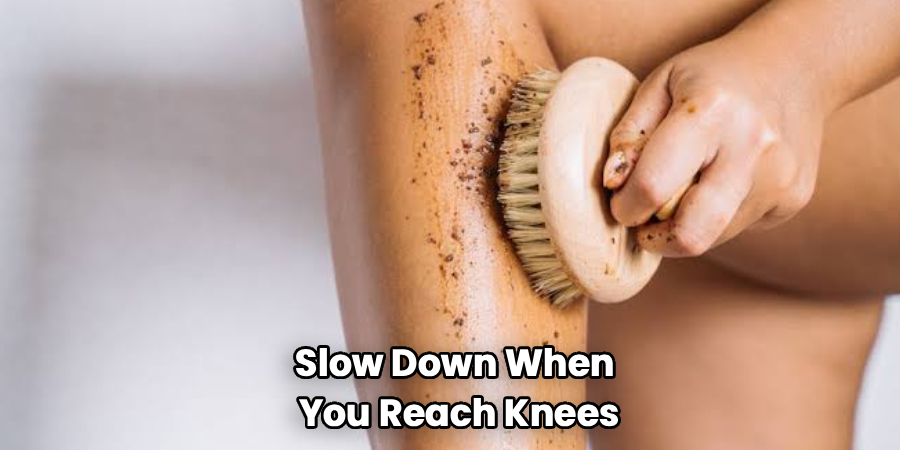
Slow down when you reach elbows, knees, heels, and ankles. These areas build up thicker skin and often look dry or ashy without regular attention. A few extra circles here make a real difference in your overall skin texture. Still, keep your touch light rather than aggressive. If a spot feels tender or looks red, ease off right away. The goal is smooth, not raw, so let consistency handle what force can’t.
Step 6: Rinse Thoroughly With Warm Water
Once you’ve covered everything, rinse it all off with warm water. Take your time here and make sure no gritty bits linger, especially in creases and behind your knees. Leftover scrub can feel itchy or leave an oily film once you dry off. Run your hands over your skin to check that it feels clean and smooth. If you used an oil-based scrub, you may want a quick pass with gentle body wash. Your skin should feel soft and refreshed, not sticky.
Step 7: Pat Your Skin Dry
Step out and gently pat yourself with a soft towel instead of rubbing. Freshly exfoliated skin is a little more sensitive, so rough drying can undo your good work. Leave your skin slightly damp rather than completely dry. That trace of moisture helps your next step lock in hydration. Take a second to notice how much smoother everything feels already. This is the payoff for keeping your pressure gentle throughout.
Step 8: Moisturize Right Away
Apply your lotion or body oil while your skin is still a bit damp. Exfoliation clears the way for moisture to sink in, so this is the best time to hydrate. Smooth it over your whole body, paying attention to those rough areas you focused on earlier. Moisturizing seals in softness and keeps your skin feeling supple for days. Skipping this step is a missed opportunity, since your skin is primed to drink it up. Give it a minute to absorb before you get dressed.
Step 9: Clean Up and Store Your Scrub
Rinse any leftover grit down the drain so nothing clogs it over time, especially with salt-based blends. Wipe down the tub or shower floor, since some scrubs leave things slippery. Seal your jar tightly and keep it in a cool, dry spot away from direct water. Proper storage keeps the texture right and extends how long it lasts. A quick cleanup now means your next session starts fresh and fuss-free. Small habits like this keep the whole routine easy.
Tips for Best Results
Want to get even more out of your routine? These small tweaks make a noticeable difference.
- Exfoliate two to three times a week, not daily. Your skin needs time to recover between sessions. Overdoing it can strip natural oils and leave you feeling dry or irritated instead of smooth.
- Match the grit to the body part. Save finer, gentler scrubs for sensitive areas and coarser ones for tough spots like heels. Using the right texture protects delicate skin while still tackling rough patches.
- Shave after you exfoliate, not before. Clearing away dead skin cells first gives your razor a cleaner path and a closer glide. It also helps prevent ingrown hairs and razor bumps.
- Keep water out of the jar. Moisture invites bacteria and breaks down the blend. A dry scoop keeps your scrub fresh and safe to use all the way to the bottom.
- Do a patch test with new products. If your skin runs sensitive, try a small amount on your inner arm first. This quick check saves you from any surprise irritation across your whole body.
Frequently Asked Questions
How Often Should I Use a Scrub?
For most people, two to three times a week hits the sweet spot. That’s enough to keep dead skin cells from building up without stripping your skin’s natural moisture. If your skin runs sensitive or dry, once a week may serve you better. Pay attention to how your skin responds and adjust from there.
Should I Exfoliate Before or After Washing?
It works well after a quick rinse but before your full body wash. Warm water softens your skin first, making the exfoliation smoother and more comfortable. Then you can cleanse away any leftover residue afterward. This order leaves your skin clean, smooth, and ready to moisturize.
Is It Safe to Use a Body Scrub on Sensitive Skin?
In most cases, yes, as long as you’re gentle and choose a fine-textured formula. Do a quick patch test first and keep the pressure light while you rub in circular motions. Exfoliate less often, maybe once a week, and moisturize right after. If you notice redness or stinging, ease off and give your skin a break.
Can I Use a Face Scrub on My Body?
You can, but it’s not the most efficient choice. Face scrubs are usually gentler and come in smaller amounts, so you’d burn through them fast on larger areas. Body formulas are made to handle tougher skin on your arms, legs, and back. Keep the two separate so each one does its job well.
Why Does My Skin Feel Dry After Scrubbing?
Dryness usually means you either scrubbed too hard, exfoliated too often, or skipped moisturizer afterward. Exfoliation clears away buildup, but it also needs a follow-up of hydration to feel its best. Apply lotion or oil while your skin is still damp to lock in moisture. Ease up on frequency if the dryness sticks around.
Does It Help With Ingrown Hairs?
It can, yes. Regular exfoliation clears the dead skin cells that trap hairs beneath the surface, which is a common cause of ingrowns. Gently working the area in circular motions helps free those trapped hairs and smooths your skin texture. Just keep the pressure light on already irritated spots to avoid making things worse.
Conclusion
Getting smooth, glowing skin really comes down to a few easy habits. Rinse first, use gentle circular motions, then moisturize while your skin is still damp. Take it slow the first few times, keep your pressure light, and you’ll quickly find the rhythm that works for you. Your skin will feel softer and look brighter in no time. If you haven’t picked a body scrub yet, check out our product picks above for options at every budget. Want more ways to pamper your skin? Browse our other self-care guides for simple routines you can try today.
